Unity
Our system maintains one continuous context across different contexts, providers, and institutions.
There is one patient. Healthcare fails when this reality is fragmented into multiple systems.

Spencer Wozniak
Co-Founder
What unity means to us
Healthcare fails when reality is fragmented. One body becomes many charts. One story becomes scattered across systems that never reconcile. Critical information exists but cannot be found when it matters.
Serelora is built on the conviction that there is a single, coherent patient identity unfolding over time, across clinicians, institutions, and obligations.
Our system maintains one continuous context so decisions are made against the whole person, not a partial view. Unity is not an aspiration—it is a technical requirement that shapes how we build.
Why unity matters
Fragmented views lead to fragmented understanding. When information is scattered, the whole picture cannot be seen—and decisions are made on incomplete evidence.
Visibility
You cannot act on what you cannot see. Fragmentation hides critical information in silos, making it invisible to those who need it most.
Coherence
Partial views create contradictions. Different systems tell different stories. Unity resolves these conflicts into a single source of truth.
Continuity
Identity persists over time. A person's history does not reset when they change providers. Unity preserves the continuity that fragmentation destroys.
One patient, many charts
Healthcare is fragmented by default. Different EHRs, different institutions, different specialties—each holding a piece of the puzzle that never gets assembled. Patients repeat their history to every new provider. Records get lost. Critical information lives in fax machines.
This fragmentation is not a minor inconvenience—it is a fundamental failure that leads to medical errors, duplicated tests, missed diagnoses, and care that falls through the cracks.
Collaboration requires context
Care is delivered by teams, not individuals. Doctors need to see nursing notes. Specialists need to see primary care records. Everyone needs access to the same unified context to coordinate effectively.
AI cannot dive into context that does not exist. Unified patient identity is the foundation for everything else—clinical reasoning, risk stratification, care coordination, and administrative automation.
How we build unity into the product
Single patient identity
Serelora maintains one canonical patient identity that persists across all data sources and over time. When records conflict, we reconcile them. When systems disagree, we resolve the discrepancy. The patient is one person, and our system reflects that truth.
- Identity matching across EHR systems
- Automated record reconciliation
- Conflict resolution with provenance tracking

Cross-provider visibility
Doctors see nursing notes. Nurses see physician insights. Specialists see primary care records. Everyone with authorized access sees the same unified patient context, enabling true collaboration across care settings.
- Role-based access with shared context
- Real-time updates across care team
- Seamless handoffs between settings
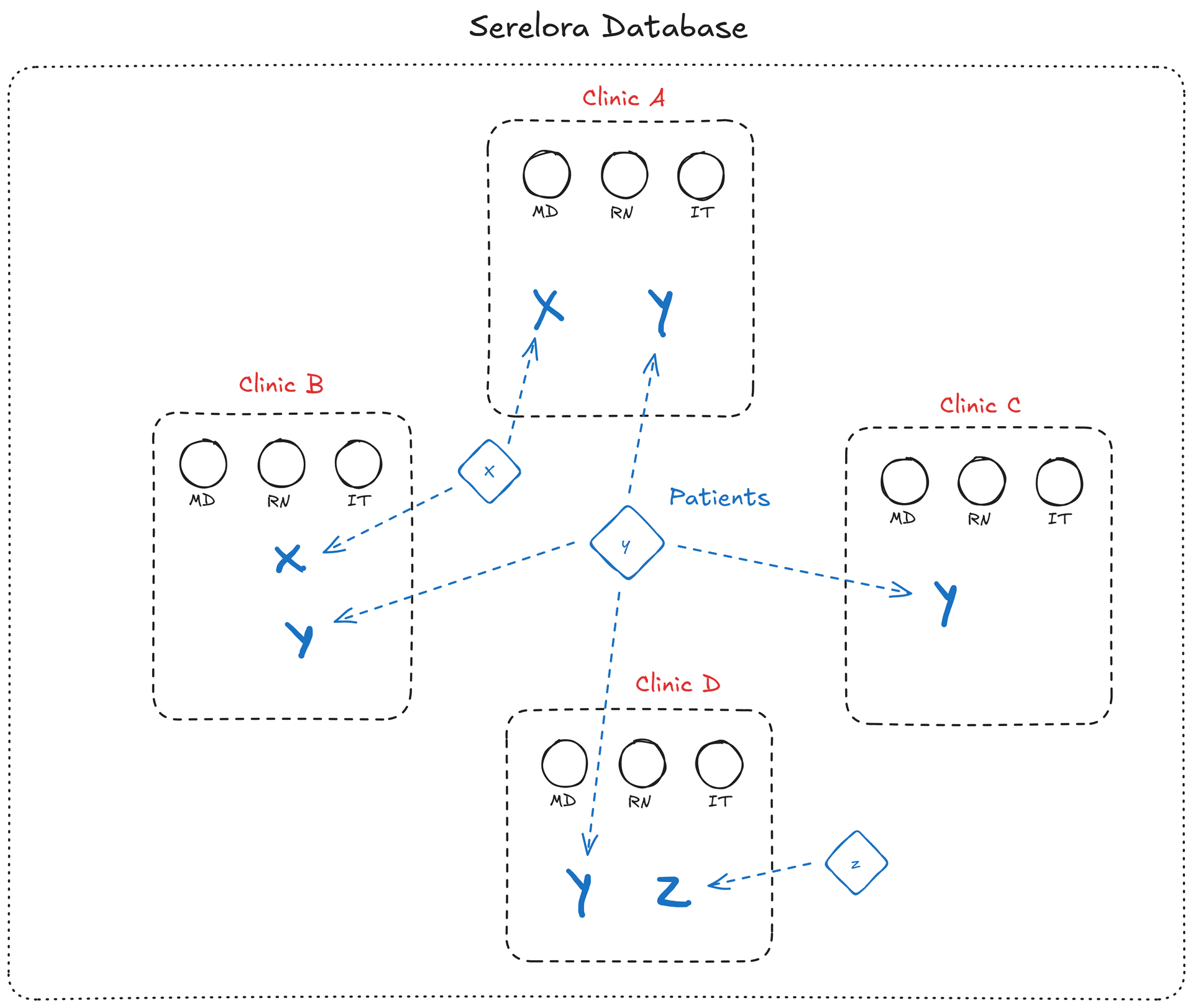
Continuous context
The patient's story does not reset when they change providers or move between settings. Serelora maintains continuous context over time, preserving history and relationships that matter for current care decisions.
- Longitudinal patient timeline
- Historical context preserved in every view
- Automatic integration of new data into existing identity
One patient. One identity. One continuous context.